

BIG MOVES IN HEALTH FOR OTAGO CENTRAL LAKES
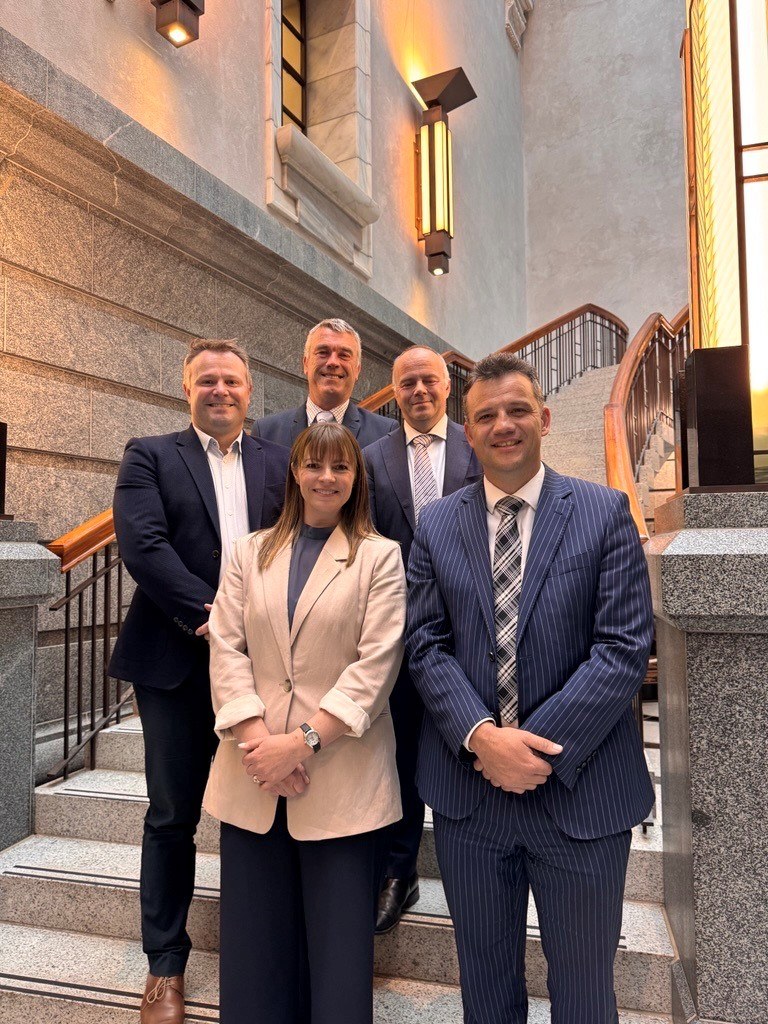
Otago Central Lakes Health Project steering group: (clockwise from left), Queenstown Lakes District Council Mayor Glyn Lewers, Waitaki MP Miles Anderson, Queenstown-based ACT MP Todd Stephenson, Southland MP Joseph Mooney and Central Otago District Mayor Tamah Alley.
This is a Media Release from the office of Southland MP Joseph Mooney that gives an update of plans for new clinical services in the Otago Central Lakes. This is an initiative Central Otago Mayor Tamah Alley is involved in, along with Queenstown Lakes Mayor Glyn Lewers. Health is a cornerstone of the recent MoU for a Regional Deal with the two councils and the Government.
***
BIG MOVES IN HEALTH FOR OTAGO CENTRAL LAKES
Plans for a new public hospital and expanded health services for the rocketing population in the Otago Central Lakes region have taken a significant leap forward.
Health NZ | Te Whatu Ora is prioritising the development of a Clinical Services Plan for the region – which includes the combined Queenstown Lakes and Central Otago Districts.
This clears the way for a new hospital in the region that could compliment and support existing health services. It could be New Zealand’s first large privately-owned and publicly operated hospital.
The plan is a prerequisite for any new public health infrastructure, and brings together demographics, growth projections and community-specific service requirements.
It follows decades of under investment in health services and infrastructure in Queenstown Lakes and Central Otago.
“This is the news from Health NZ we’ve been waiting for,” Queenstown Lakes District Mayor Glyn Lewers says.
“Until recently, despite our growth, Health NZ had no plans for expansion in our area. We’re finally on their radar.”
The current Lakes District Hospital, in Queenstown, was built in 1988 when the Otago Central Lakes population was 30,000 people. It is the only Emergency Department in the wider Central Lakes region, which now has a population of almost 80,000.
Two beds were added in 2024, taking it to a total of 12 beds for inpatients and 10 beds in the emergency department.
Health NZ acknowledged the deficit in advice to the Health Minister in December 2024.
“Current service capacity and service mix in the Central Lakes districts is stretched and insufficient to meet increasing local population numbers,” it wrote.
Southland MP Joseph Mooney says expanding health infrastructure in our region will support our exceptional healthcare professionals with the great work they do caring for our communities.
“We’re seeing a shift in the discussion from ‘if’ there should be a new hospital to ‘where and when’,” he says.
Mr Lewers says Health NZ has agreed to use more accurate council derived population projections for its planning, instead of Stats NZ figures, and to address the health care needs of Queenstown Lakes and Central Otago collectively.
“It makes far more sense for accessing health services than the historical health board boundaries,” Lewers says.
The move follows the announcement of a Memorandum of Understanding between the councils and the Government to begin negotiations for a Regional Deal for Otago Central Lakes. The Regional Deal proposal included health as a cornerstone.
Read more:Otago Central Lakes signs Regional Deal MoU with Government - Central Otago District Council
Central Otago District Council Mayor Tamah Alley says, “the proposal addresses the urgent need for more publicly-funded health services by partnering with the increasing number of private hospitals, clinics and investors already building – or planning to build in the area.”
The Otago Central Lakes Health Services and Assets Project is backed by a charitable trust and steered by community leaders – Southland MP Joseph Mooney, Waitaki MP Miles Anderson, Queenstown-based ACT MP Todd Stephenson and Mayors Tamah Alley (Central Otago) and Glyn Lewers (Queenstown Lakes) – working with health infrastructure specialist Helen Foot of Markit Consulting since October 2023.
Mr Mooney says 70 per cent of New Zealand’s population who live more than two hours’ drive from a base hospital live in Otago Central Lakes.
Incorporating public health infrastructure alongside current or planned private providers in Alexandra, Clyde, Cromwell, Wānaka and Queenstown will bring public healthcare closer to home for the area’s growing number of residents and visitors, he says.
“We want to work with existing providers and help uplift the service everyone can provide.
“Figures provided by Health NZ show in only 4 years there has been a 51% increase in Otago Central Lakes babies born in Dunedin and Southland hospitals, as well as a 51% increase in Otago Central Lakes residents being admitted to Dunedin and Southland hospitals.
“Growing our local public health infrastructure will ease pressure on these hospitals and reduce the need for people to travel,” Mr Mooney says.
The Health NZ figures show almost 400 Otago Central Lakes patients gave birth outside the region in 2024 (115 in Dunedin and 281 in Southland: 396).
MP for Waitaki Miles Anderson says Otago Central Lakes communities are calling for action and recent moves show the Government is moving to address their concerns.
“Wānaka’s population has nearly doubled since 2013 and there are now 18,000 people living in the Upper Clutha. Associate Health Minister Matt Doocey met with our community recently and acknowledged that public health services haven’t kept up with our population.
“Health NZ’s Clinical Services Plan is a really positive step in assessing what is needed so we can get on and bring more public health infrastructure closer to home for our people,” Mr Anderson says.
Queenstown based ACT MP Todd Stephenson says the Otago Central Lakes Project’s Strategic Report delivered to Health Minister Simeon Brown earlier this year means much of the groundwork needed to incorporate public health services alongside existing and planned private providers has already taken place.
“The Otago Central Lakes Health Services and Assets Project has built a strong case for expanding publicly funded healthcare in our region by leveraging the private sector’s ability to deliver health infrastructure faster and more efficiently. I look forward to the recommendations from Health NZ following their Clinical Services Plan.
“Our region needs action, and it is great to see this important step getting things moving,” Mr Stephenson says.
Health NZ’s Clinical Services Plan begins this month and is expected to be complete by December this year.


